Injecting Personality into Pixels: Why Funhouse is Redefining Brand Voice in the Digital Age
In an era defined by algorithmic perfection and sterile minimalism, a distinct shift is occurring in the visual language of the internet. Professionals, entrepreneurs, and creators are increasingly rejecting the homogenized look of corporate templates in favor of designs that evoke genuine human connection. This pivot toward authenticity has resurrected the importance of typography as a storytelling tool, rather than just a vessel for information. At the forefront of this movement is Funhouse, a typeface that challenges the rigidity of modern design standards.
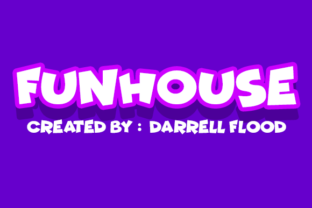
Created by the prolific font designer Darrell Flood, Funhouse is not merely a collection of glyphs; it is a statement of intent. As a fun, cartoon-style font, it offers a refreshing departure from the geometric sans-serifs that have dominated the last decade of user interface (UI) and branding design. For the modern creator or marketer, understanding how to leverage a typeface like Funhouse is essential for standing out in a crowded digital landscape.
The End of "Corporate Memphis" and the Rise of Whimsy
For several years, the design world was saturated with "Corporate Memphis"—flat, geometric illustrations and rigid typography that prioritized scalability over soul. While functional, this aesthetic eventually blended into a visual noise where every SaaS platform and startup looked identical. Today, consumer expectations have evolved. There is a growing demand for brands that feel approachable, playful, and distinct.
Funhouse fits perfectly into this broader industry trend. Its cartoon-style aesthetic signals to the user that a brand does not take itself too seriously, yet it takes the user's experience very seriously. This is particularly relevant for lifestyle brands, children’s education platforms, and creative agencies. The font’s inherent whimsy acts as a visual cue for joy and creativity, helping to lower the barrier between a brand and its audience.
Understanding the Anatomy of Funhouse
At its core, Funhouse is characterized by irregular baselines, varied stroke widths, and a hand-drawn quality that feels organic. Unlike rigid digital fonts that look as though they were plotted on a grid, Funhouse embraces imperfection. This characteristic is vital in the current market because imperfection is often associated with authenticity.
When a freelancer or entrepreneur selects a typeface, they are choosing a voice. Funhouse speaks in a voice that is energetic and informal. It is designed to capture attention immediately. In a world where users scroll through content at breakneck speeds, the unique silhouette of Funhouse can stop a thumb mid-scroll, offering a moment of delight that a standard Helvetica or Arial cannot provide.
The Psychology of Playful Typography
There is a psychological component to why professionals are gravitating toward styles like Funhouse. Research in color and shape psychology suggests that rounded, irregular shapes evoke feelings of safety and happiness. Sharp, rigid lines suggest efficiency and coldness, while the flowing, erratic nature of a cartoon font suggests movement and life.
For marketers, this is a powerful tool. Using Funhouse in a headline or a call-to-action (CTA) button can subtly shift the user's emotional state. It transforms a mundane task, like signing up for a newsletter, into a more engaging interaction. This is not just about aesthetics; it is about optimizing the user journey through emotional design.
Practical Applications for Modern Workflows
The utility of Funhouse extends across various professional workflows. It is not a font meant for long-form body copy, where legibility at small sizes is paramount. Instead, it excels in high-impact areas where personality drives conversion.
1. Branding and Logo Design
For entrepreneurs building a personal brand or launching a niche product, Funhouse offers an instant identity. It works exceptionally well for logos that need to convey a sense of fun, food, entertainment, or creativity. A food truck, a podcast about pop culture, or a graphic design studio could utilize Funhouse to immediately communicate their ethos without saying a word.
2. Social Media and Content Marketing
The creator economy thrives on personality. On platforms like Instagram, TikTok, and YouTube, thumbnails and graphics need to pop. Funhouse is an excellent choice for overlay text on video thumbnails or stylized quotes. Its cartoonish flair fits the fast-paced, entertainment-first nature of social media algorithms, helping creators increase click-through rates (CTR) through visual distinctiveness.
3. Packaging and Merchandise
As direct-to-consumer (DTC) brands proliferate, packaging has become a key differentiator. Funhouse translates well to physical products, particularly in the snack, beverage, or novelty sectors. The font’s bold presence ensures that a product stands out on a digital shelf or a physical retail rack.
Technological Accessibility and Workflow Integration
One of the reasons Darrell Flood’s creations, including Funhouse, have gained traction is their accessibility. In the past, high-quality, stylistic fonts were often locked behind expensive licensing fees or complex installation processes. Today, the barrier to entry has been lowered.
Funhouse is widely available on major font repositories, making it easy for freelancers to incorporate into their toolkit. It integrates seamlessly with standard design software such as Adobe Illustrator, Photoshop, Canva, and Figma. This ease of integration is crucial for the modern workflow, where speed and agility are prized. A designer can quickly mock up a concept using Funhouse to test the waters of a "playful" direction without committing significant resources.
Furthermore, as web technologies advance, variable fonts and web-font loading speeds have improved. While cartoon-style fonts can sometimes be heavy due to their complex vectors, modern optimization techniques allow fonts like Funhouse to be used on websites without significantly impacting Core Web Vitals or page load times. This technical feasibility makes it a viable option for web designers who previously avoided stylistic fonts for performance reasons.
Connecting to the "Anti-Design" and Retro Trends
The resurgence of interest in cartoon typography is also linked to the "anti-design" and retro-web trends. We are seeing a return to the aesthetics of the late 90s and early 2000s—think bright colors, chaotic layouts, and playful imagery. Funhouse taps into this nostalgia while remaining fresh.
For creatives working in the tech space, using a font like Funhouse can be a way to humanize technology. As AI and automation become more prevalent, there is a counter-movement to make digital products feel more human. Funhouse, with its hand-drawn feel, serves as a reminder that there are humans behind the screen. It bridges the gap between cold digital interfaces and warm human interaction.
Strategic Implementation: Less is More
While Funhouse is a powerful tool, it requires strategic implementation. Professionals should view it as a spice rather than the main ingredient. Using it for an entire website body would likely result in cognitive overload and readability issues. Instead, the best practice is to pair it with a clean, neutral sans-serif font.
For example, a designer might use a font like Open Sans or Roboto for the paragraph text to ensure clarity, and use Funhouse exclusively for H1 headers, pull quotes, or specific UI elements like buttons. This contrast creates a visual hierarchy that guides the user's eye and maintains the brand's professional credibility while injecting personality.
Conclusion: The Future is Fun
The digital landscape is shifting away from the impersonal and moving toward the expressive. As consumers become more selective about the brands they engage with, the visual language of those brands must evolve. Funhouse, Darrell Flood’s contribution to this evolution, represents more than just a cartoon font; it represents a permission slip for brands to be playful.
For the entrepreneur, the marketer, or the designer, adopting typefaces like Funhouse is a forward-looking strategy. It acknowledges that in a world of automated perfection, the most valuable currency is human connection. By embracing the whimsy and energy of Funhouse, professionals can create experiences that resonate, engage, and ultimately, convert.