Taylor Alison: A Digital Font with the Soul of Hand Stitching
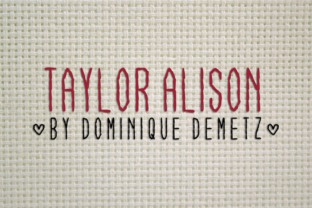
In the vast landscape of digital typography, where clean sans-serifs and elegant serifs dominate, there exists a niche for typefaces that offer something more personal, more tactile. Taylor Alison is one such font, a decorative display typeface designed to replicate the charming, imperfect look of hand stitching. It’s not a tool for body text or formal documents, but rather a creative asset meant to inject specific textural intrigue and a crafted aesthetic into design projects.
What Defines the Taylor Alison Typeface?
At its core, Taylor Alison is a display font. This classification is critical to understanding its purpose. Display fonts are engineered for headlines, logos, titles, and short bursts of text where visual impact is the primary goal. The defining characteristic of Taylor Alison is its stitch-like construction. Each letterform appears as if it has been carefully sewn onto a fabric or paper background, with visible thread paths and subtle imperfections that mimic a handmade quality.
The font’s key characteristics include:
- Textured Letterforms: The strokes are not solid. They are composed of dashed or dotted lines, creating the illusion of thread.
- Organic Imperfection: No two letters are perfectly identical in their simulated stitch path, which avoids the sterile, mechanical feel of many digital fonts. This variation is intentional and adds to its handmade charm.
- Decorative Style: Its aesthetic leans heavily towards craft, DIY, whimsy, and nostalgia. It evokes feelings of cozy projects, personalized gifts, and artisanal care.
Practical Application and Strengths
The real value of Taylor Alison lies in its ability to solve a specific design problem: how to convey a handmade, craft-oriented, or playful tone quickly and effectively. Its strengths are most apparent in targeted scenarios.
For graphic designers and branding specialists, Taylor Alison can be a powerful tool for client projects that require a soft, approachable, or artisanal identity. Think of a logo for a local bakery, a handmade soap company, or a children's boutique. The font immediately communicates the brand's values without a single word of explanation. It works exceptionally well when paired with a clean, simple sans-serif for body text, allowing the stitch effect to headline without overwhelming the viewer.
Marketers and social media managers can leverage Taylor Alison to create standout visuals. A promotional graphic for a craft workshop, a holiday sale announcement for a small Etsy shop, or a quote card for a lifestyle blog gains immediate personality. Its textural quality helps content pop in a crowded feed, potentially increasing engagement by signaling a distinct brand voice.
For publishers, bloggers, and educators, the font finds utility in niche applications. A recipe blog might use it for section headers to evoke a home-cooked feel. An educator creating materials for young children could use it for fun, thematic titles. A publisher of craft books or magazines might employ it for chapter headings to reinforce the subject matter visually.
Usability, Flexibility, and Consistency
Evaluating a font like Taylor Alison requires a look beyond aesthetics into practical usability. Its performance in real-world use hinges on a few key factors.
Readability vs. Style: This is the primary trade-off. Taylor Alison sacrifices immediate readability for stylistic effect. At large sizes, as used in a headline, the stitch effect is clear and legible. At smaller sizes, the texture can become muddy and difficult to parse, making it unsuitable for paragraphs, captions, or fine print. A professional user must exercise judgment, reserving it for applications where size is not a constraint.
Character Set and Flexibility: A quality font should offer more than basic uppercase and lowercase letters. Check if Taylor Alison includes essential punctuation, numbers, and perhaps common diacritical characters for broader language support. Some premium versions may include stylistic alternates or ligatures, offering slight variations to avoid repetition in longer words, which enhances its handmade illusion.
Technical Consistency: Despite its intentionally imperfect look, the font should be technically sound. This means consistent baseline alignment, appropriate kerning (spacing between characters), and clean vector paths that scale without distortion. A well-crafted decorative font like Taylor Alison should render crisply on both screen and print when used at its intended size.
Who Benefits Most from Taylor Alison?
The ideal user of Taylor Alison is someone whose work or projects involve themes of craftsmanship, personal touch, nostalgia, or playful creativity.
- Small Business Owners in the handmade, artisanal, or boutique sectors can use it to build a cohesive visual identity that speaks directly to their audience.
- Freelance Creatives and Designers can add it to their toolkit as a specialty font for client work that demands a distinct, non-generic aesthetic.
- Bloggers and Content Creators in lifestyle, DIY, cooking, or parenting niches can use it to brand their content and make their visuals more recognizable.
- Educators and Event Planners can use it for themed materials, invitations, or signage where a fun, approachable tone is desired.
Conversely, it is less suitable for corporate communications, technical documentation, legal text, or any context where clarity, formality, and neutrality are paramount.
Long-Term Value and Professional Considerations
When considering Taylor Alison for long-term use, think about its versatility within your existing workflow. It will not replace a workhorse font family. Instead, it serves as a specialist tool. Its value is in its specificity. If you frequently work on projects that align with its aesthetic, it can become a reliable go-to for adding instant character. If your work is diverse, it may sit dormant until the right project comes along.
From a licensing perspective, always verify the terms. Whether it’s free for personal use or requires a commercial license, understanding the permissions is a non-negotiable professional step. Ensure the license covers your intended use, whether for a client logo, merchandise, or digital products.
Ultimately, Taylor Alison is a font of focused intent. It doesn’t try to be everything. Its effectiveness is directly tied to the appropriateness of the project. Used thoughtfully, it can elevate a design from generic to memorable, adding a layer of warmth and texture that resonates with audiences seeking authenticity. For designers and creators who value the ability to communicate nuanced moods through typography, Taylor Alison represents a valuable and distinctive option in the vast digital type library.