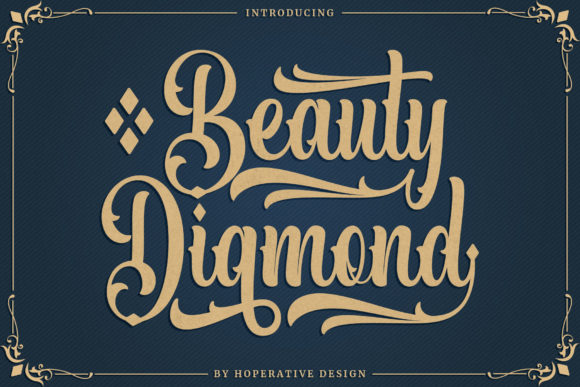
The Enduring Allure of Beauty Diamond: A Font for Making a Statement
There are moments when a standard, clean font just won’t do. When a project demands a certain weight, a historical texture, or an immediate sense of grandeur. This is where a typeface like Beauty Diamond enters the conversation. It’s not a font for body text in a report; it’s a declaration. Inspired by the ornate, handcrafted aesthetic of vintage playing cards and the intricate strokes of blackletter calligraphy, this font carries a specific kind of energy—one of tradition, luxury, and meticulous detail.
Beyond the Wedding Invitation: Unexpected Places for Ornate Typography
When you first encounter Beauty Diamond, with its elaborate swashes and diamond-like flourishes, your mind might jump to formal event stationery. And you’d be right—it’s spectacular for that. But limiting it to weddings and galas overlooks its broader potential. Think about the craft beverage industry. A boutique distillery designing a label for a small-batch, barrel-aged spirit needs a typeface that communicates heritage and patience. Beauty Diamond on a whiskey or gin bottle immediately suggests a story of craftsmanship, setting the product apart on a crowded shelf with an air of old-world authenticity.
Similarly, consider the world of high-end personal branding. A bespoke tailor, a master jeweler, or a private chef specializing in luxury experiences could use this font for their logo or monogram. It transforms a business name into an emblem, something that feels more like a crest than a simple wordmark. The key is that it signals exclusivity and a dedication to the finer details, which is precisely the message these professionals want to convey.
Designing for Digital Depth and Physical Texture
In digital spaces, Beauty Diamond finds a powerful role in creating immersive experiences. Imagine a website for a historical museum’s new exhibit on medieval manuscripts. Using this font for section headers or pull quotes doesn’t just label content—it visually transports the visitor into the era being discussed. It adds a layer of thematic depth that a sans-serif font simply cannot achieve. For podcasters or YouTube creators in the history, fantasy, or true-crime genres, using Beauty Diamond in channel art or video thumbnails can instantly communicate the show’s genre and tone, attracting the right audience before they even press play.
The application becomes even more tactile in print. For a book cover design, particularly in genres like epic fantasy, gothic romance, or historical fiction, this font is a natural fit. It doesn’t just spell out the title; it helps build the world the reader is about to enter. Likewise, in album art for musicians in the metal, classical, or folk genres, the ornate lettering becomes part of the artistic statement, reflecting the music’s complexity and emotional weight.
A Practical Guide to Working with Swashes and Alternates
One of the most discussed features of Beauty Diamond is its extensive set of swashes and alternates. This is where its true versatility lies, but it also requires a thoughtful approach. The font is PUA encoded, meaning every glyph is accessible through standard software character maps, which is a huge practical benefit for designers.
However, the power of these alternates is in their selective use. Not every letter needs its most extravagant version. The goal is to create harmony and emphasis, not visual noise. A common technique is to use the standard characters for the main word and then apply a swashed alternate to the first and last letters, creating an elegant frame. For a short headline like “The Grand Collection,” you might give the ‘T’ and ‘n’ their most flourished forms while keeping the interior letters more restrained. This creates a focal point and ensures readability.
It’s also worth considering the medium. On a textured, high-quality paper stock, the fine details of the swashes will print beautifully. On a low-resolution digital screen or a busy, patterned background, those same details can become muddy and lost. Always test the font in its final environment. A design that looks stunning in your design software might need slight adjustments—like increasing the size or simplifying the alternates—to remain effective in its real-world application.
Choosing the Right Context: Strengths and Considerations
The strength of Beauty Diamond is its undeniable personality. It excels in projects where you want the typography to be a central design element, evoking a specific mood or era. It’s a problem-solver for designs that feel generic and need a dose of character. For branding, it helps carve out a niche that feels premium and established.
The primary consideration is, of course, legibility at small sizes or in long passages. This is a display font, meant for headlines, logos, and short, impactful text. Using it for a paragraph would be a challenge for the reader. It also pairs best with simple, neutral companion fonts. A clean sans-serif or a classic serif for body text will provide a necessary resting point for the eye, allowing the ornate headers to shine without overwhelming the layout.
Ultimately, Beauty Diamond is a tool for storytelling through letterforms. It’s for the designer, entrepreneur, or creator who understands that the shape of the letters themselves can communicate as much as the words they form. Whether it’s gracing a bottle of artisanal liqueur, the cover of a fantasy novel, or the logo of a luxury service, it offers a way to make a statement that is both timeless and deeply detailed. It’s not just about writing words; it’s about crafting an identity.