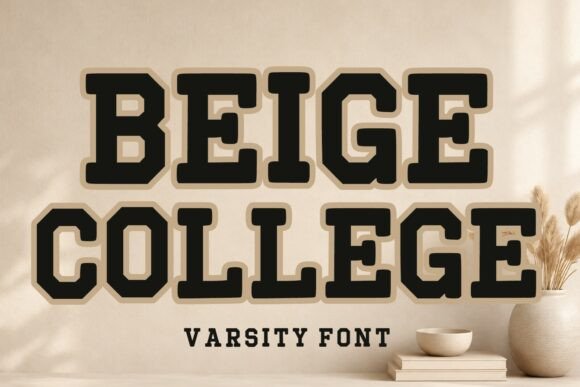
Beige College: Integrating Varsity Typography into Your Design Process
In the world of design, typography is rarely just about picking a font that looks good. It’s a strategic decision that communicates tone, history, and intent. For anyone working in branding, merchandise, or marketing, understanding where a specific typeface like Beige College fits into your workflow is crucial. This isn't just a decorative choice; it's a tool that solves a specific communication problem: how to instantly convey strength, tradition, and athletic energy. Let's break down how to approach this font not as a final flourish, but as a foundational element in your planning and execution.
Understanding the Core Asset: What Beige College Brings to the Table
Before you can integrate a tool, you need to know what it is. Beige College is a bold, athletic display typeface. Its DNA is drawn from classic American college sports, varsity jackets, and vintage campus culture. This means its letterforms are strong, geometric, and built for impact, not for setting long paragraphs of body text. Think of it as the headline act, not the supporting player. Its clean, layered appearance mimics the look of embroidered or appliquéd lettering you'd find on a championship jacket or a team uniform.
This context is your first practical consideration. You wouldn't use a sledgehammer to hang a picture frame. Similarly, you deploy Beige College for specific jobs: creating standout headlines for posters, designing jersey numbers, crafting logos for sports teams or esports organizations, or developing graphics for streetwear and school merchandise. Its purpose is to deliver an immediate, professional sports-inspired aesthetic. Recognizing this role is the first step in a smooth workflow, preventing the misuse of a powerful tool on a task that requires a more subtle instrument.
Planning Phase: Matching Font to Project Goals
The most efficient time to consider your typography is during the planning or concept stage. Ask yourself: what is the core emotion or identity this project needs to communicate? If the answer involves words like tradition, strength, energy, school spirit, or championship, then a varsity-style typeface belongs on your shortlist. This is where Beige College starts to make strategic sense.
For example, if you're a freelancer hired to brand a new local fitness center, your initial mood board might include images of dynamic athletes, classic gym equipment, and bold, confident typography. Beige College fits this visual language perfectly. It’s a decision made early that informs the entire direction of the project. Conversely, if you're designing a serene yoga studio's branding, this font would be a mismatch, and knowing that in the planning phase saves hours of revision later.
Integration with Other Design Elements
A font doesn't exist in a vacuum. Its effectiveness is defined by how it interacts with other assets in your design system. Beige College, with its bold structure, pairs well with cleaner, more neutral sans-serif fonts for body copy. This creates a visual hierarchy: the varsity font grabs attention for the headline, while a font like Open Sans or Lato provides readable information below.
Consider its compatibility with your color palette. It works powerfully with classic school color combinations—navy and gold, crimson and white, forest green and silver. It also holds its own in monochromatic schemes, where its texture and form become the focal point. During the asset gathering phase, ensure you have complementary icons, textures (like leather, wool, or distressed paper), and imagery that align with the vintage athletic vibe. This preparation creates a cohesive toolkit, making the actual design execution far more efficient.
Execution and Workflow: Practical Implementation
Once the project is greenlit and the concept is set, it's time to execute. Here’s how to practically work with Beige College within common design software like Adobe Illustrator, Photoshop, or even online platforms like Canva.
- Establish Hierarchy First: Start by setting your primary headline or key text element in Beige College. This immediately anchors the design's tone. Adjust the size, tracking (letter-spacing), and leading (line-spacing) to ensure it commands the intended space without feeling cramped.
- Explore Stylistic Alternates: Many professional display fonts include alternate characters or stylistic sets. Check the OpenType features in your software. You might find different styles for the letters 'A', 'G', or 'R' that can add a unique touch to your headline, allowing for customization while maintaining the core aesthetic.
- Apply Layering Effects (If Appropriate): The description notes a "clean layered appearance." This is a practical hint. In your design software, you can create depth by duplicating the text layer, offsetting it slightly, and changing its color to create a shadow effect. This mimics the look of stitched or raised lettering on apparel, adding a tactile, professional quality to digital designs.
- Test for Readability at Scale: Bold display fonts can sometimes lose clarity at very small sizes. Always zoom out and check your design at the size it will be viewed—whether on a phone screen, a printed poster, or a merchandise mockup. Beige College is designed for impact, so ensure it remains legible in its intended context.
Use Cases: Where This Font Shines in Real Projects
Understanding theory is one thing; seeing application is another. Let's look at specific scenarios where integrating Beige College streamlines the process and enhances the outcome.
- Sports Team & University Branding: For a coach, athletic director, or student organization, this font is a direct solution. Use it for team logos, schedule posters, and social media graphics to create an instant sense of official, spirited identity. It works seamlessly with existing school mascots and colors.
- Apparel & Merchandise Design: If you're running a streetwear brand or creating custom merchandise for an event, typography is critical. Beige College provides that authentic, vintage athletic feel. It’s ideal for designing front chest prints on hoodies, bold text on hats, or numbering for jerseys. Its bold geometry translates well to screen printing and embroidery.
- Event Marketing: Promoting a charity 5K, a alumni reunion, or a campus festival? This font instantly communicates energy and community. Use it on digital banners, email headers, and printed flyers to grab attention and convey the event's lively spirit.
- Esports and Gaming: The competitive, team-based nature of esports aligns perfectly with varsity aesthetics. Beige College can be used to create team logos, stream overlays, and tournament graphics that look professional and built for competition.
Long-Term Use and Consistency
If you adopt Beige College as part of a brand's identity, document its use. Create a simple style guide that specifies which font weights are used for headlines, subheads, and any limited body text applications. Note the exact color codes it pairs with and the recommended minimum size for legibility. This documentation ensures consistency across all future materials, whether you're creating them yourself or handing the project off to another team member. It turns a single font choice into a reliable part of a larger, efficient system.
Ultimately, Beige College Varsity Font is more than a nostalgic design choice. It's a specialized tool for specific communication goals. By understanding its strengths, planning its use within your project's lifecycle, and implementing it with attention to detail and compatibility, you can harness its power to create visuals that are not only eye-catching but also strategically effective. It’s about using the right tool for the job to achieve a confident, championship-level result.