Bringing a Handcrafted Vibe to Your Projects with Vintage Rainbows
Sometimes, a project needs more than just clean, standard text. It needs a bit of personality, a touch of handmade charm, or a vibrant splash of color that feels both nostalgic and fresh. This is where a font like Vintage Rainbows comes into play. It’s not just a typeface; it's a design tool built for moments when you want your words to feel intentionally crafted and full of character. Think of it as the digital equivalent of a hand-lettered sign at a local farmer's market or the playful, colorful text on a retro candy wrapper.
More Than Just Letters: Understanding the Tool
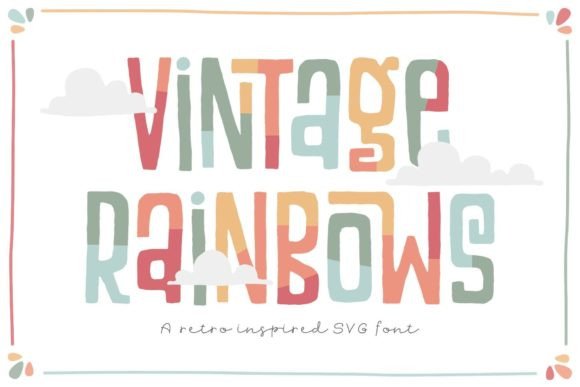
At its core, Vintage Rainbows is a hand-drawn font with intentionally rough edges, giving it an organic, imperfect quality that feels human. But its standout feature is the color-blocked OpenType-SVG version. This isn't your average single-color font. Each letter is rendered with built-in color and texture, like a tiny piece of digital collage art. This technology allows for incredibly detailed effects that were once impossible in a font file.
It also comes packed with fun ligatures—special character combinations that automatically merge into unique glyphs. Type certain letter pairs, and they seamlessly connect or transform, adding an extra layer of custom flair without any extra work on your part. For creators who worry about technical access, the font is PUA encoded. This simply means every stylistic swash, alternate character, and colorful glyph is easily accessible through your system's character map or the glyphs panel in professional software, even if your program doesn't fully support advanced OpenType features.
Where Does a Font Like This Actually Shine?
The real value of Vintage Rainbows is realized in specific, practical scenarios. It’s not for writing a business report, but it’s perfect for making a headline pop, creating an engaging social media graphic, or designing product packaging that stands out on a virtual shelf.
For the Digital Entrepreneur and Marketer
If you run an online shop, your product mockups and promotional graphics are your storefront. A bold, textured headline using Vintage Rainbows can instantly convey a brand identity that's playful, artisanal, or fun. Imagine it on a mockup for a children's book cover, a banner for a summer sale on a boutique clothing site, or the title slide of an Instagram story announcing a new product launch. The color-blocking effect adds visual weight and interest that a standard bold font can't match, potentially increasing engagement and click-through rates.
For Content Creators and Bloggers
In the crowded space of digital content, first impressions are visual. Using this font for the title graphic of a blog post about DIY crafts, vintage recipes, or a colorful travel guide can immediately set the tone and attract the right audience. It signals to readers that the content inside is creative, detailed, and visually considered. For YouTubers or podcasters, it can be used to create eye-catching thumbnail art or episode cover images that stand out in a feed full of standard, sleek fonts.
For Hobbyists and Personal Projects
The applications extend well into personal creativity. Think about designing a custom birthday invitation for a child's party, creating a unique header for a personal journal or planner, or making a motivational poster for your home office. The font's playful ligatures can make a simple phrase like "You Are Awesome" feel like a special, custom-designed piece of art. For scrapbookers who have moved to digital layouts, it offers a quick way to add a title that has the authentic, textured feel of physical letter stickers.
For Educators and Community Organizers
Engagement often starts with visual appeal. A teacher creating a classroom newsletter, a reading log, or a fun worksheet can use Vintage Rainbows to make the material feel more inviting and less intimidating for young students. Similarly, a community group designing flyers for a local fair, a bake sale, or a charity 5K can use the font to create a warm, approachable, and energetic vibe that encourages participation.
Making It Work: Practical Considerations
Before diving in, it’s important to understand the tool's requirements to ensure a smooth creative process. The most critical factor is software compatibility. To experience the full color-blocked effect, you need an application that supports OpenType-SVG fonts. This includes Adobe Photoshop CC 2017 and later, Adobe Illustrator CC 2018 and later, and Adobe InDesign CC 2019 and later. In these programs, the colorful glyphs will render perfectly.
For other applications that support standard OpenType features but not SVG, you will still get the beautifully designed black-and-white version of the font, complete with the automatic ligatures. The PUA encoding is your safety net here. It guarantees that even in programs with limited OpenType support (like some versions of Microsoft Word or older design software), you can manually select and insert any alternate glyph or swash from your system's character viewer.
Think about context and contrast. Because Vintage Rainbows is inherently detailed and textured, it works best for headlines, logos, and short bursts of text. Using it for long paragraphs would sacrifice readability. Pair it with a simple, clean sans-serif or serif font for body text to create a balanced and professional design. Also, consider your color palette. While the font has its own built-in colors, ensure those colors complement, rather than clash with, the overall color scheme of your project for a cohesive look.
Finally, remember that its greatest strength—its hand-drawn, imperfect nature—is also its defining characteristic. It’s designed to feel authentic and a little rough around the edges. Embrace that quality. It’s what makes it perfect for projects that aim to feel personal, creative, and full of life, turning ordinary text into a memorable visual statement.