Strategic Design with Graceful: A Practical Guide to Color Font Pairing
Elevating Visual Communication Through Intentional Typography
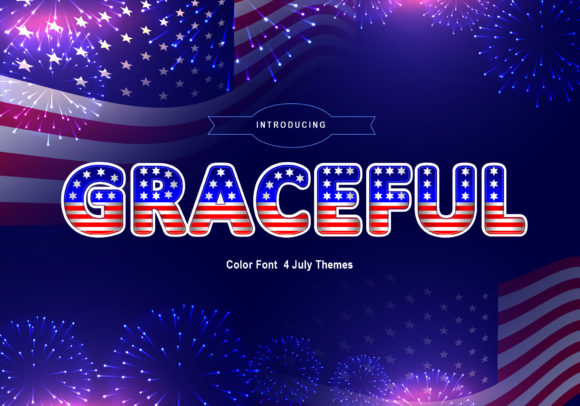
In the crowded landscape of digital and print design, typography serves as the silent ambassador of your brand. Choosing the right typeface is not merely a decorative decision; it is a strategic one that impacts readability, brand recall, and emotional resonance. Among the myriad options available to modern creators, Graceful stands out as a specialized tool designed for specific, high-impact scenarios. It is a fun, duo-tone color font that offers a unique aesthetic, particularly suited for American-centric projects and seasonal campaigns. However, leveraging such a distinct typeface requires more than just installation; it requires a thoughtful approach to design planning and execution.
Graceful is engineered to solve a specific visual problem: how to create festive, patriotic, and engaging designs without spending hours on manual coloring or layering. For entrepreneurs, marketers, and hobbyists, time is a non-renewable resource. By utilizing a color font like Graceful, you streamline the production process while maintaining a high standard of visual quality. This article explores how to strategically integrate Graceful into your workflow to achieve better results, from product packaging to digital branding.
Understanding the Technical Foundation: OpenType-SVG and Compatibility
Before integrating Graceful into your projects, it is crucial to understand the technology behind it. Graceful is an OpenType-SVG font. Unlike traditional monochromatic fonts, OpenType-SVG (Scalable Vector Graphics) allows for multi-colors and transparency to be embedded directly into the font file. This means when you type a letter, you are inserting a vector image that contains gradients and distinct color separations, such as the red, white, and blue found in Graceful.
While this technology offers superior aesthetic results, it comes with specific compatibility requirements that decision-makers must consider during the planning phase. Graceful is fully compatible with professional design software including Photoshop, Illustrator, Silhouette, and Inkscape. These platforms support the rendering of SVG data, allowing you to see and manipulate the colors as intended.
However, strategic planning requires acknowledging limitations. Graceful is not compatible with Cricut machines via standard OTF or TTF files, as Cricut Design Space does not currently support the rendering of SVG data within font files. For users relying on Cricut for cutting, a workaround is necessary—typically involving converting the text to a compound path or rasterizing the image in a compatible program first. Understanding these technical boundaries prevents workflow bottlenecks and ensures your project timeline remains intact.
Strategic Applications: Where Graceful Delivers Maximum Value
The utility of Graceful is best realized in projects that demand a celebratory, patriotic, or distinctly "American" aesthetic. Its design makes it an ideal candidate for the 4th of July, Memorial Day, or general branding for products that emphasize heritage and fun. To use Graceful effectively, one must look beyond the font itself and consider the broader context of the design.
Apparel and Product Packaging
For small business owners in the apparel industry, Graceful offers a turnkey solution for seasonal merchandise. T-shirts, tote bags, and hats designed for summer events benefit from the duo-tone nature of the font. Because the colors are embedded, you save production time that would otherwise be spent manually separating colors for screen printing or heat transfer vinyl (HTV).
In product packaging, Graceful can be used to create eye-catching headers or feature text. For example, a boutique food brand releasing a limited-edition summer sauce could use Graceful on the label to immediately signal the product's seasonal relevance. The visual impact is immediate, reducing the cognitive load on the consumer and speeding up the decision-making process at the point of sale.
Branding and Digital Presence
While Graceful is too decorative for body text, it is highly effective for short-form branding elements. Social media graphics, website hero images, and email headers can utilize Graceful to draw attention to specific calls to action. For instance, a marketing campaign promoting a "Summer Sale" can use Graceful to create a sense of urgency and excitement. The font acts as a visual anchor, guiding the viewer's eye to the most important information.
Decision-Making Framework: When to Use Graceful
Adopting a new typeface should be a deliberate choice. To determine if Graceful is the right tool for your current project, apply this simple decision-making framework:
- Audience Alignment: Does your target demographic respond to patriotic, festive, or playful visuals? If your brand voice is strictly corporate, minimalist, or formal, Graceful may clash with your established identity.
- Contextual Relevance: Is the project tied to a specific event, such as the 4th of July or a national celebration? Graceful is highly contextual; using it for a winter holiday campaign, for example, would likely confuse your audience.
- Technical Feasibility: Do you have access to compatible software (Photoshop, Illustrator, etc.)? If your entire workflow is dependent on software that cannot render SVG fonts, you must account for the extra steps required to flatten or rasterize the text.
By answering these questions, you move from random selection to strategic implementation. The goal is not to use Graceful everywhere, but to use it where it amplifies your message.
Avoiding Common Pitfalls in Decorative Typography
One of the risks of using a distinctive font like Graceful is overuse. When a font is "fun" and "decorative," there is a temptation to apply it to every element of a design. This leads to visual clutter and dilutes the font's impact. To maintain a professional standard, adhere to the following guidelines:
- Limit Usage: Use Graceful for headlines, logos, or single-word accents. Avoid using it for paragraphs or detailed instructions, as the decorative nature can impair readability.
- Contrast is Key: Pair Graceful with a clean, sans-serif font for supporting text. This contrast creates a visual hierarchy that makes the design easier to navigate. The decorative font grabs attention, while the clean font conveys the details.
- Color Harmony: While Graceful comes with preset colors, ensure these colors do not clash violently with your background or surrounding design elements. Even though the font colors are fixed, you can adjust the background to create a harmonious palette.
Long-Term Value and Workflow Efficiency
For freelancers and agencies, efficiency is directly tied to profitability. Investing in assets like Graceful is a strategic move to reduce design time for recurring seasonal events. Instead of commissioning new artwork every July, you have a reliable, high-quality asset ready to deploy.
Furthermore, the consistency offered by a font ensures that your branding remains cohesive across different platforms. Whether the text appears on a physical name tag or a digital banner, the Graceful typeface maintains its integrity, reinforcing brand recognition. This consistency is vital for building trust with your audience over time.
Ultimately, Graceful is more than just a collection of letters; it is a specialized tool for communication. By understanding its technical specifications, aligning it with your strategic goals, and applying it with restraint, you can leverage this duo-tone font to create designs that are not only visually appealing but also commercially effective. Whether you are a hobbyist crafting invitations or a business owner launching a product line, Graceful offers a practical path to polished, professional results.