Honey Jar Font: A Sweet Guide to Handwritten Typography in Modern Design
In the vast digital landscape of graphic design, where sharp vectors and sterile sans-serifs often dominate, there is a growing movement towards authenticity. We crave connection, warmth, and a human touch in our visual media. This is exactly where handwritten typography steps in, offering a remedy to the rigid perfection of computer-generated text. Among the myriad of options available to designers, crafters, and entrepreneurs, one typeface stands out for its distinct personality: the Honey Jar font.
But what exactly makes a font like Honey Jar so effective? Is it merely about choosing a script that looks "cute," or is there a deeper strategy behind using handwritten fonts in branding and design? This article explores the Honey Jar font, its characteristics, and the broader significance of friendly typography in modern creativity, business, and communication.
Understanding the Appeal of Handwritten Typography
Before diving into the specifics of the Honey Jar typeface, it is essential to understand why handwritten fonts have become a staple in the designer's toolkit. Typography is not just about legibility; it is about tone. A font carries a voice. When you read a text set in Times New Roman, you hear authority and tradition. When you read Helvetica, you hear modern neutrality. When you read a font like Honey Jar, you hear a voice that is playful, approachable, and distinctly human.
Handwritten fonts simulate the imperfections of the human hand. They feature varying baselines, irregular stroke weights, and organic curves. These subtle "flaws" trick the brain into perceiving the content as more personal. In a world saturated with automated content and corporate jargon, a handwritten aesthetic acts as a visual signal of authenticity. It suggests that a real person is behind the message, which fosters trust and emotional connection.
Decoding the Honey Jar Aesthetic
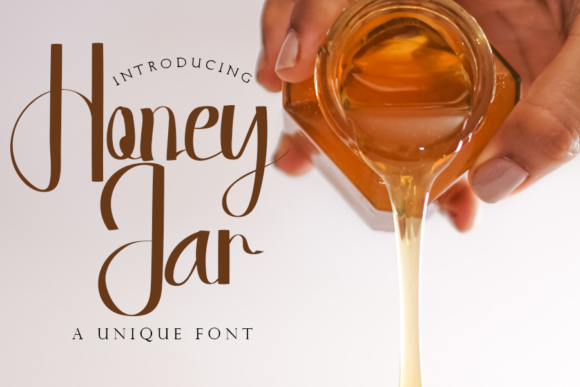
The Honey Jar font is categorized as a cute and friendly handwritten font. While this description sounds simple, the execution of such a design requires a delicate balance. To be effective, a font must maintain legibility while preserving its stylistic quirks.
The "Quirky" Factor
The description of Honey Jar highlights that it is "playful and a little bit quirky." In typography terms, "quirky" usually refers to unique letterforms that break the rules of standard calligraphy. This might include:
- Unusual Swashes: Decorative tails on letters like 'y', 'g', or 'h' that loop in unexpected directions.
- Bouncy Baselines: Letters that do not sit perfectly straight on the line but jump up and down slightly, mimicking natural handwriting.
- Rounded Terminals: Soft, circular endings on strokes that give the font a bubbly, approachable feel.
These characteristics make Honey Jar ideal for projects that need to convey joy. It avoids the formality of traditional script fonts (which often mimic wedding invitations or legal documents) and opts instead for a casual, everyday vibe.
Practical Applications: Where to Use Honey Jar
The utility of a font is defined by its versatility. Honey Jar is marketed as a perfect fit for logos, branding, posters, and crafty DIY projects. Let’s break down how this font functions in these different contexts.
1. Branding and Logos
For small businesses, particularly those in the lifestyle, food, or children's sectors, the logo is the first handshake with the customer. A font like Honey Jar can instantly communicate the nature of the business. For example:
- Bakeries and Cafes: The rounded, soft edges of the font mimic the comfort of baked goods. It feels homemade and wholesome.
- Children’s Clothing or Toys: The playful nature appeals to both parents and children, suggesting safety and fun.
- Lifestyle Bloggers: It creates a personal brand identity that feels relatable rather than corporate.
2. Poster Design
When designing posters, hierarchy and mood are key. Honey Jar is rarely suitable for body text (the small paragraphs of information) because handwritten fonts can be tiring to read in long blocks. However, as a display font, it shines. It is perfect for headlines, sub-headers, or call-to-action phrases. A poster for a local fair, a garage sale, or a charity event using Honey Jar immediately feels welcoming and community-oriented.
3. Crafty DIY Projects
This is perhaps where Honey Jar finds its most enthusiastic audience. The rise of digital crafting tools like Cricut and Silhouette has democratized design. Crafters use these machines to cut vinyl, paper, and fabric. Fonts like Honey Jar are incredibly popular for:
- Personalizing tote bags and t-shirts.
- Creating custom decals for water bottles or laptops.
- Designing scrapbook elements.
- Making greeting cards.
The "cute" aesthetic fits perfectly with the handmade movement, allowing creators to add a professional yet personal touch to their physical products.
The Psychology of Color and Shape in Font Choice
Why does the name "Honey Jar" evoke a specific feeling? It is a classic example of semantic association. The name suggests sweetness, warmth, golden colors, and natural ingredients. When a designer chooses this font, they are subconsciously aligning their project with these positive attributes.
Psychologically, rounded shapes (which are prevalent in fonts like Honey Jar) are associated with safety and friendliness. Sharp, angular shapes can be perceived as aggressive, modern, or edgy. By choosing a font with soft curves, a designer lowers the psychological barrier between the viewer and the message. This is particularly useful in educational materials for young children or health and wellness branding, where a sense of calm is desired.
Technical Considerations for Beginners
While Honey Jar is a beautiful asset, using it effectively requires an understanding of basic design principles. Beginners often make the mistake of overusing decorative fonts. Here is a guide on how to implement Honey Jar without overwhelming your design.
Pairing Fonts
Never use a handwritten font for everything. A design needs contrast. If you use Honey Jar for your main headline, pair it with a clean, simple sans-serif font (like Montserrat, Open Sans, or Roboto) for the body text. This contrast allows the headline to stand out while ensuring the rest of the information remains easy to read.
Spacing and Legibility
Because Honey Jar has a "bouncy" baseline and irregular shapes, it requires careful attention to kerning (the space between letters). Sometimes, the swashes of one letter might collide with the next. Most modern design software allows you to manually adjust this spacing. Always print a test copy or view your design at the actual size to ensure the text is readable. If the letters are too close together, the "cute" font becomes a messy scribble.
Licensing and Usage
A common misunderstanding among beginners is regarding font licensing. Just because a font is available for download does not mean it is free for all uses. Most fonts like Honey Jar come with specific licenses:
- Personal License: For non-commercial projects (e.g., a birthday card for a friend).
- Commercial License: For projects where you make money (e.g., selling t-shirts with the font on them).
Always read the "ReadMe" file included with your download to ensure you are respecting the creator's work.
The Role of Typography in the Digital Age
In an era dominated by AI-generated content and standardized web layouts, the choice of typography has become a powerful tool for differentiation. Websites that use standard system fonts (like Arial or Times New Roman) often blend into the background. By incorporating a distinct font like Honey Jar for headings or accent text, a website can create a unique "voice" that enhances User Experience (UX).
Furthermore, typography plays a crucial role in SEO (Search Engine Optimization) indirectly. While search engines cannot "see" the font style, they measure user engagement. If your site is visually appealing and easy to navigate—partly thanks to good typography—users will stay longer. This reduces bounce rates and signals to search engines that your content is valuable.
Common Misunderstandings About "Cute" Fonts
There is a tendency in professional circles to dismiss "cute" or "quirky" fonts as unprofessional. This is a misunderstanding of context. Professionalism is not always synonymous with seriousness; it is about appropriateness.
- Misunderstanding: Handwritten fonts are only for kids' stuff.
- Reality: High-end artisanal brands, organic food companies, and boutique hotels frequently use handwritten scripts to convey exclusivity and care.
- Misunderstanding: You can use decorative fonts for long paragraphs.
- Reality: This creates "visual noise." Honey Jar is best used sparingly for maximum impact.
Conclusion
The Honey Jar font is more than just a collection of digital curves and lines; it is a tool for communication. It represents a desire to bring warmth, personality, and a human touch back into our visual world. Whether you are a small business owner designing your first logo, a teacher creating engaging classroom materials, or a hobbyist crafting a personalized gift, understanding how to use fonts like Honey Jar effectively can elevate your work.
By respecting the principles of design—contrast, hierarchy, and legibility—you can harness the playful energy of Honey Jar to create designs that are not only beautiful but also deeply engaging. In the end, good design is about connection, and few things connect us quite like the warmth of a friendly, handwritten style.