The Witch Font: Capturing the Spirit of Modern Gothic Typography in Design
In the vast and often sterile world of digital typography, where clean sans-serifs and geometric precision dominate corporate branding, there is a growing counter-movement seeking authenticity, texture, and personality. This shift is most visible in seasonal marketing, event branding, and the burgeoning creator economy. At the intersection of nostalgia and modern design needs lies a specific tool that has garnered significant attention: The Witch. More than just a collection of glyphs, The Witch is a spooky and fun handwritten font, perfect for any Halloween-themed project, yet its utility and aesthetic appeal extend far beyond a single holiday.
Understanding the Anatomy of The Witch
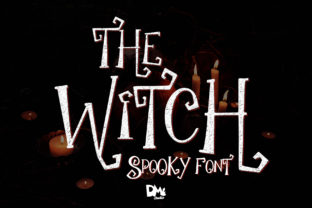
At its core, The Witch is a display typeface characterized by its irregular baselines, jagged edges, and a distinctively hand-lettered feel. It mimics the erratic flow of ink from a quill or the rough texture of a brush stroke, evoking imagery of ancient spell books, haunted manors, and whimsical horror. However, defining it merely by its visual style misses the technical sophistication that makes it viable for professional use.
Unlike standard script fonts that can feel static or overly mechanical, The Witch employs OpenType features and contextual alternates to simulate true handwriting. When you type a phrase, the letters connect in ways that avoid repetition, preventing the "tiling" effect that plagues lesser typefaces. This technical nuance is crucial for designers who need to maintain the illusion of organic creation. The font balances "scare" with "whimsy," making it accessible rather than terrifying, which broadens its application across different audience demographics.
The Psychology of the "Spooky" Aesthetic in Modern Marketing
Why are professionals and entrepreneurs paying attention to a font specifically designed for Halloween themes? The answer lies in the psychology of engagement and the evolution of seasonal marketing. We are currently witnessing the "Halloween-ification" of consumer culture. What was once a single night of trick-or-treating has evolved into a two-month retail season rivaling Christmas in some sectors. Consumers, particularly Millennials and Gen Z, actively seek out brands that participate in cultural moments with authenticity.
The Witch taps into the desire for playful escapism. In a high-stress economic environment, audiences respond to visuals that promise fun and a break from reality. For marketers, utilizing a typeface like The Witch signals that a brand doesn't take itself too seriously and understands the cultural zeitgeist. It is a visual shorthand for "fun," "mystery," and "seasonal excitement." When a coffee shop launches a pumpkin spice menu or a boutique releases a horror-themed merchandise line, the typography used sets the immediate emotional tone. The Witch offers that immediate emotional resonance without requiring complex illustration.
Shifting Workflows and the Demand for Authenticity
The relevance of The Witch is also tied to changing workflows in the creative industry. There is a distinct move away from "Corporate Memphis" and overly polished, stock-art aesthetics toward designs that feel human-made. This trend, often referred to as the "Lo-Fi" or "Indie" aesthetic, values imperfection.
Freelancers and content creators, who often operate with limited budgets and tight deadlines, need assets that deliver high impact quickly. Hand-lettering is a specialized skill that takes years to master and hours to execute. A high-quality handwritten font like The Witch democratizes this skill. It allows a social media manager to create an Instagram Story or a newsletter header that looks bespoke and hand-crafted in a matter of minutes.
This efficiency does not come at the cost of quality. The vector-based nature of the font ensures that whether it is scaled for a massive billboard or shrunk for a favicon, the integrity of the "ink" texture remains. This scalability is a non-negotiable requirement in today’s multi-platform environment, where a single campaign must live across print, web, mobile, and video.
Practical Applications Beyond the Haunted House
While the prompt identifies The Witch as perfect for Halloween projects, a forward-looking analysis reveals its versatility across various sectors. The "spooky" aesthetic has permeated lifestyle and fashion branding, particularly within the "Cottagecore," "Goblincore," and "Dark Academia" subcultures that remain influential online.
1. Book Covers and Publishing: In the self-publishing boom, cover design is the primary differentiator. Authors in the Young Adult (YA) fantasy, paranormal romance, and horror genres rely heavily on atmospheric typography. The Witch provides the necessary genre signaling, telling the reader instantly what kind of story awaits them.
2. Event Branding and Weddings: The rise of non-traditional weddings has introduced themes like "Victorian Gothic" or "Enchanted Forest." Stationery designers use fonts like The Witch to create invitations that feel like artifacts rather than standard paper products. It adds a layer of immersive experience before the event even begins.
3. Product Packaging: Consider the craft beverage market, specifically craft beers and specialty spirits. Brands often use rugged, hand-drawn typography to convey artisanal quality. A witch-themed gin or a seasonal autumnal ale benefits from the rugged, organic feel of The Witch, distinguishing it on a crowded shelf against mass-produced competitors using generic block letters.
Integration with Modern Design Technology
The utility of The Witch is amplified by its compatibility with modern design tools. Whether a creator is working in Adobe Photoshop, Illustrator, Canva, or Procreate, the font integrates seamlessly. This cross-platform compatibility is essential for the modern "hybrid" designer who might sketch on an iPad but finalize in desktop software.
Furthermore, the font addresses the technical challenge of legibility. One common pitfall of decorative fonts is that they become unreadable at small sizes or against complex backgrounds. The Witch is designed with high contrast and distinct letterforms, ensuring that while the vibe is chaotic, the communication remains clear. This balance is critical for Call to Action (CTA) buttons and headlines where readability directly impacts conversion rates.
The Business Case for Thematic Typography
For entrepreneurs and business owners, investing in a theme-appropriate typeface like The Witch is not an expense; it is a strategic asset. Brand consistency is a key driver of trust. When a brand commits to a seasonal re-skin using high-quality assets, it demonstrates attention to detail and a commitment to customer engagement.
Using The Witch allows businesses to create a cohesive ecosystem. The font can be used across email headers, website banners, social media posts, and even internal communications (like a Halloween party invite for staff). This uniformity reinforces the campaign message. In a digital landscape where attention spans are measured in seconds, the immediate recognition of the "spooky season" vibe—conveyed instantly by the sharp, jagged strokes of The Witch—can be the difference between a scroll-past and a click-through.
Future-Proofing Your Design Assets
As we look toward future trends, the appetite for hyper-niche, thematic content is only growing. Algorithms favor content that aligns with current cultural moments, and "spooky season" is one of the most reliable traffic drivers in the calendar year. Having The Witch in a designer's toolkit is a form of future-proofing. It is a specialized weapon that ensures readiness for the inevitable surge in Halloween and autumn-themed content requests.
Moreover, the versatility of the "fun spooky" genre means the font is not limited to October. It can be used for Friday the 13th promotions, horror movie reviews, magic-themed children’s parties, or fantasy gaming content throughout the year. The longevity of the asset is determined by its quality and its ability to evoke a specific, desired emotion—something The Witch achieves effortlessly.
Conclusion
The Witch represents more than just a seasonal novelty; it is a reflection of the broader shift toward personalized, textured, and emotionally resonant design. In an era of automation, the hand-drawn aesthetic of The Witch offers a human touch that audiences crave. For professionals, creators, and marketers, it serves as a vital tool for capturing the spirit of the season, driving engagement, and elevating brand storytelling. By combining whimsical horror with professional-grade typography, The Witch ensures that your next project is not only seen but felt.