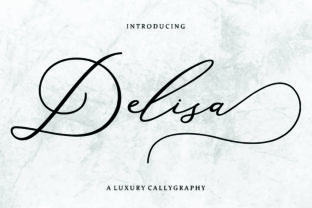
Delisa: The Sweet, Modern Handwritten Font Elevating Personal and Professional Design
In a digital landscape saturated with clean, geometric sans-serifs and authoritative serifs, there is a growing hunger for authenticity and warmth. This shift is more than just aesthetic preference; it reflects a broader cultural movement toward human-centric design. Enter Delisa, a sweet and modern handwritten font that captures the essence of personal touch without sacrificing legibility. It is not merely a collection of letters; it is a versatile tool designed to bridge the gap between professional polish and intimate connection.
The Evolution of Handwritten Typography in the Digital Age
Typography trends have historically oscillated between the mechanical precision of the industrial age and the organic fluidity of the pre-digital era. For a long time, professional design demanded rigidity. However, the rise of the creator economy and the prioritization of "brand personality" have forced a re-evaluation of what professionalism looks like. We are currently witnessing a significant evolution where handwritten scripts are no longer reserved for informal notes. Instead, fonts like Delisa are engineered to function within modern workflows, offering the spontaneity of a pen stroke with the structural integrity required for high-resolution digital media.
This evolution is driven by user expectations. Audiences today are adept at spotting generic, template-based content. They crave genuine interaction, and typography is often the first signal of a brand's voice. Delisa fits perfectly into this changing habit by offering a script that feels personal and curated. It moves away from the rigid calligraphy of the past, embracing a looser, more contemporary style that feels accessible rather than aristocratic.
Deconstructing the Aesthetic: Swashes, Ligatures, and Versatility
What sets Delisa apart from the thousands of script fonts available in design marketplaces is its meticulous attention to detail, specifically regarding its swashes and ligatures. These are not just decorative add-ons; they are functional elements that dictate the rhythm of the text.
- Ligatures: In typography, a ligature occurs when two or more letters are joined to form a single unit. In Delisa, these ligatures prevent awkward collisions between characters, ensuring that the flow of the word mimics natural handwriting.
- Swashes: These are the extended, flowing strokes that often decorate the beginning or end of a letter. Delisa features gorgeous swashes that allow designers to add emphasis and flair without cluttering the overall design.
This combination makes the font incredibly versatile. It is "sweet" enough to evoke nostalgia and romance, yet "modern" enough to sit comfortably alongside contemporary graphic design elements like minimalist line art or bold geometric shapes.
Practical Applications: From Wedding Invitations to Social Media
The true test of a typeface is its utility across different mediums. Delisa excels in this regard, catering to a wide range of creative practices. Its authentic feel makes it a prime candidate for projects where emotion is the primary driver.
Event Stationery and Wedding Design
The wedding industry is one of the largest consumers of script fonts. Delisa is particularly suited for gorgeous wedding invitations, save-the-dates, and envelope addressing. The font’s ability to mimic authentic handwriting adds a layer of intimacy to formal events. It suggests that the invitation was crafted with care, rather than mass-produced. For stationary artists, the font offers a reliable foundation for beautiful stationary art, allowing for elegant headers and quotes that feel personal.
Digital Marketing and Social Media
In the realm of digital marketing, standing out in a crowded feed is essential. Eye-catching social media posts often rely on a hierarchy of text to stop a user from scrolling. Delisa serves as an excellent accent font for Instagram stories, Pinterest graphics, and TikTok overlays. Its handwritten nature breaks the monotony of standard web fonts, adding a human touch to brand communications. Furthermore, its utility extends to cute greeting cards sold on platforms like Etsy or used in email marketing campaigns to foster customer loyalty.
The Technical Edge: PUA Encoding and Workflow Efficiency
While aesthetics are crucial, functionality is paramount for professionals. A beautiful font that is difficult to use quickly becomes a bottleneck in the design process. This is where Delisa’s technical specifications offer a distinct advantage.
The font is PUA (Private Use Areas) encoded. For the non-technical user, this is a significant quality-of-life feature. In the past, accessing special glyphs or alternate character styles required advanced software knowledge or digging through complex character maps. PUA encoding means that all of the cute glyphs and swashes are easily accessible, even in basic text editing software.
This accessibility democratizes high-end design. It allows entrepreneurs, bloggers, and educators—who may not be professional graphic designers—to create polished materials without a steep learning curve. You can access the wealth of special features, including alternate glyphs and ligatures, with ease, ensuring that your workflow remains smooth and efficient.
Design Recommendations and Best Practices
To maximize the impact of Delisa, it is important to understand how it interacts with other design elements. Because it is a script font with high personality, it requires careful pairing.
- Pairing with Neutrals: Delisa pairs best with clean, neutral sans-serif fonts (such as Montserrat or Open Sans). This contrast allows the handwritten elements to pop without overwhelming the reader.
- Spacing and Legibility: Handwritten fonts often require more generous line height (leading) than standard fonts. Ensure that your text has room to breathe to maintain readability, especially in longer paragraphs.
- Contextual Use: Use Delisa for headlines, sub-headers, and call-to-action phrases. It is generally not recommended for long-form body text, as dense blocks of handwritten script can cause eye strain.
Conclusion: The Future of Authentic Design
As we look forward, the demand for tools that facilitate authentic connection will only grow. Delisa is more than just a font; it is a response to the modern need for warmth in a cold digital world. Whether you are a freelancer designing a brand identity, a marketer crafting a campaign, or a hobbyist creating art, Delisa provides the versatility and technical ease required to bring your vision to life. By integrating this sweet, modern script into your toolkit, you are not just choosing a typeface—you are choosing to communicate with sincerity and style.