Goldray: The Rounded Sans Font That Softens Your Message Without Losing Its Impact
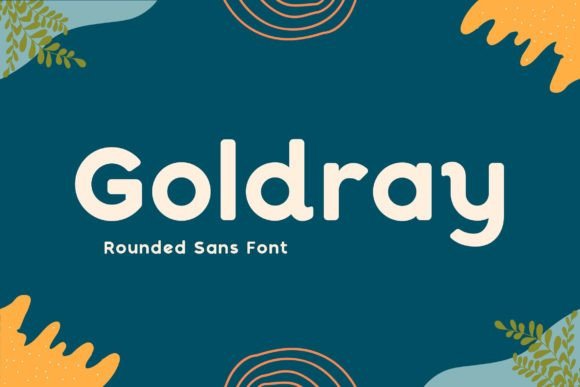
You know that feeling when you’ve got a great idea for a project, but the final design just feels... stiff? The images are perfect, the copy is sharp, but something in the typography creates a barrier between the message and the audience. This is where a typeface like Goldray steps in. It’s a rounded sans font, but calling it just that doesn't quite capture its utility. It is the visual equivalent of a warm handshake—professional, but immediately disarming.
The real magic of a rounded sans like Goldray lies in its psychology. Sharp, angular fonts often convey authority, tradition, and sometimes rigidity. They work for law firms and legacy news outlets. But if your project requires a human touch—something that feels accessible, modern, and friendly—you need curves. Goldray offers those soft terminals that make text feel less like a command and more like a conversation. It bridges the gap between looking professional and feeling approachable.
The "Friendly Tech" Dilemma
Consider the tech startup scene. If you are launching a new meditation app, a fintech solution for Gen Z, or an eco-friendly subscription box, you want to avoid looking intimidating. A sharp geometric sans might look cool, but it can feel cold.
Imagine you are designing the user interface for a banking app aimed at first-time savers. The topic—money—is inherently stressful for many people. Using a font like Goldray for the headers and instructional text can subconsciously lower the user's anxiety. The rounded letterforms signal safety and ease. It suggests that the app is user-friendly before the user even reads a single word of the copy. In this scenario, Goldray isn't just a font; it's a user experience tool that builds trust.
Branding for the "Human" Sector
Now, let’s step out of the digital screen and look at physical branding. Think about the packaging for artisanal coffee, organic baby food, or high-end cosmetics. These industries rely heavily on texture and sensation.
Goldray shines here because of its versatility. It is bold enough to stand out on a crowded shelf but soft enough to retain a boutique feel. If you are a graphic designer working on a logo for a yoga studio or a local bakery, Goldray provides the perfect foundation. It handles branding exceptionally well because it doesn't distract from the logo mark itself. It supports the iconography rather than competing with it. The rounded nature of the font mimics organic shapes found in nature, making it a natural fit for brands that want to emphasize health, wellness, or sustainability.
The Power of Glyphs and Ligatures
One of the most common frustrations for designers is finding a font that looks great in a headline but lacks character. Standard block letters can feel repetitive. This is where the technical specifications of Goldray become a massive creative advantage.
The font is PUA encoded. If you aren't a typography nerd, that might sound like technical jargon, but it’s actually a gateway to creativity. It means you have easy access to all the alternate glyphs and ligatures without needing complex design software hacks.
Let’s say you are creating a wedding invitation or a high-end event flyer. You don't want the typography to look like it came off a standard office printer. By utilizing the ligatures in Goldray, you can connect letters in unique ways that give the text a custom-lettered appearance. Maybe you want a stylistic alternate for the letter "g" or "a" to add a bit of flair to a specific word. Because of the PUA encoding, you can drop these into Microsoft Word, Adobe Illustrator, or Canva just as easily as you would type a standard letter. This allows you to create that high-end, bespoke look without spending hours manually vectorizing text.
Practical Application for Content Creators
You don't have to be a full-time graphic designer to benefit from a typeface like this. If you are a social media manager or a content creator, you know the struggle of keeping your Instagram grid or YouTube thumbnails looking consistent.
Goldray works incredibly well for overlaying text on video content. Because rounded sans fonts have distinct, clear shapes, they remain legible even when moving or placed over a busy background image. If you are editing a travel vlog and need to pop a location name onto the screen, Goldray offers readability that doesn't feel aggressive. It allows the viewer to read the text quickly without pulling them out of the immersive experience of the video.
Matching Goldray with Other Fonts
Typography is rarely a solo act; it’s usually a duet. One of the strengths of Goldray is its ability to play well with others. However, choosing the right partner requires some thought.
A common mistake is pairing a rounded font with another rounded font, which can make a design look childish or unprofessional. Instead, try pairing Goldray with a high-contrast serif font. The soft, modern curves of Goldray for the headers can provide a striking contrast to a classic, sharp serif used for the body text. This creates a visual hierarchy that guides the reader's eye naturally. The headers grab attention with their friendly vibe, and the body text delivers the information with authority.
Understanding the Limitations
While Goldray is incredibly versatile, no font is a silver bullet for every situation. It is important to recognize where a rounded sans might not serve the project best.
For example, if you are designing a dense annual report, a legal document, or a scientific white paper, Goldray might not be the best choice for long-form body text. Rounded fonts can sometimes cause "eye fatigue" when used in large blocks of small text because the uniformity of the curves can make it harder for the eye to track individual words quickly. In these cases, it is better to use Goldray for pull quotes, call-to-action buttons, or section headers, and stick to a traditional serif or humanist sans for the main paragraphs.
Additionally, if the goal of the design is to convey raw, gritty power—think heavy metal album covers or extreme sports branding—the "friendly" nature of Goldray might undercut the message. You need sharp edges to convey danger or intensity; soft curves send a signal of safety, which might be the wrong signal in those contexts.
Why Versatility Matters for Your Toolkit
Ultimately, building a font library is about investing in tools that solve multiple problems. You want typefaces that can adapt to a client's changing needs or your own evolving style. Goldray fits this criteria because it occupies the "sweet spot" of modern design. It is trendy enough to feel current, but classic enough in its structure that it won't look dated in two years.
Whether you are designing a mobile app interface, packaging a luxury candle, or creating a welcoming presentation for a community workshop, Goldray provides a solid foundation. It allows you to communicate with clarity while maintaining a personality that feels distinctly human. By leveraging its unique ligatures and soft aesthetic, you can transform a standard project into something that feels truly considered and crafted.