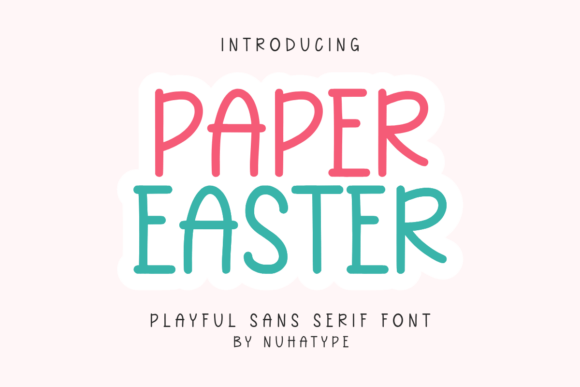
Paper Easter: The Elegantly Minimalist Font for Modern Creativity
In the vast world of digital design and crafting, typography often serves as the silent storyteller. It sets the mood, conveys the message, and bridges the gap between an idea and its visual realization. Among the myriad of typefaces available today, Paper Easter stands out as a beacon of simplistic charm and elegant utility. It is not just a font; it is a design philosophy that embraces minimalism, natural flow, and the understated beauty of thin sans-serif lettering.
Understanding the Essence of Paper Easter
At its core, Paper Easter is an elegantly minimalist, thin sans-serif font that mirrors the charm of natural handwriting. Unlike heavy, blocky typefaces that demand attention through sheer volume, Paper Easter invites the viewer in with a gentle whisper. It captures the fluidity of a human hand holding a fine-tipped pen, offering a personalized touch without sacrificing legibility. This unique characteristic makes it a versatile tool for anyone looking to add a layer of sophistication to their projects.
The design philosophy behind Paper Easter is rooted in the concept of "less is more." In an era where digital noise is constant, this font provides a visual respite. Its clean lines and airy spacing allow the content to breathe, ensuring that the message is not lost in a cluttered visual landscape. For designers, this means the font can adapt to various contexts—whether it is the focal point of a wedding invitation or a subtle supporting element in a complex graphic layout.
The Versatility in Digital and Physical Crafting
One of the most compelling aspects of Paper Easter is its broad applicability across different mediums. It excels in bringing a simplistic allure to a wide range of creative endeavors. Understanding where and how to use this font can transform ordinary crafts into extraordinary artistic expressions.
1. Planners, Journals, and Interior KDP
The world of planning and journaling has seen a massive resurgence in popularity. Enthusiasts are no longer satisfied with standard, utilitarian layouts; they seek aesthetic pleasure in their organizational tools. Paper Easter is perfectly suited for this niche. Its delicate strokes are ideal for headings in interior KDP (Kindle Direct Publishing) books, such as daily planners, gratitude journals, and habit trackers.
When used in journals, the font mimics the look of a personal diary entry, fostering a sense of intimacy between the user and the product. For authors publishing low-content books on platforms like Amazon KDP, using Paper Easter can significantly elevate the perceived value of the product. It transforms a generic template into a curated, boutique-style stationery item.
2. The Cricut Revolution and Sticker Design
The rise of home cutting machines, such as Cricut and Silhouette, has democratized the world of custom labeling and sticker making. Paper Easter is a favorite among the Cricut community for several reasons. Firstly, its thin letterforms cut cleanly, reducing the risk of tearing delicate materials like vinyl or sticker paper. Secondly, its aesthetic aligns perfectly with the current trend of "clean girl" or minimalist sticker designs.
Whether you are creating planner stickers to mark special dates or designing labels for a home pantry, Paper Easter provides a professional finish. The font ensures that text remains readable even at smaller sizes, a crucial factor when designing labels for spice jars or cosmetic containers.
3. Tumblers, Mugs, and Tote Bags
Custom drinkware and accessories are not just personal projects; they are a booming business. When applying text to curved surfaces like tumblers and mugs, readability is paramount. Heavy, complex fonts can become distorted or difficult to read when wrapped around a cylinder.
Paper Easter solves this problem with its clean, sans-serif structure. It wraps gracefully around curved surfaces, maintaining its elegance. For tote bags—often used for grocery shopping, library trips, or as fashion statements—a witty quote or an inspiring phrase rendered in Paper Easter can turn a simple canvas bag into a piece of art. The font’s thin nature ensures that the text does not overwhelm the physical object, allowing the design to remain chic and sophisticated.
The Psychology of Minimalist Typography
Why does a font like Paper Easter resonate so deeply with modern audiences? The answer lies in the psychology of visual perception. Minimalist typography is associated with clarity, honesty, and modernity. When a brand or a creator uses a clean, handwritten-style font, it signals a focus on content over flashiness.
In the context of inspiring quotes, the font plays a crucial role in emotional delivery. A bold, aggressive font might feel demanding, but the thin, gentle lines of Paper Easter feel encouraging and supportive. It suggests that the words themselves are enough to carry the weight of the message, without the need for typographical shouting. This makes it an excellent choice for wall art, greeting cards, and social media graphics intended to uplift and motivate.
Practical Relevance in Modern Business and Education
Beyond personal crafting, Paper Easter holds significant relevance in professional settings. In the business world, branding is everything. Small businesses, particularly those in the lifestyle, wellness, and stationery sectors, often struggle to find a typeface that feels both professional and approachable. Paper Easter bridges this gap.
For educational materials, clarity is key. Teachers and educators creating worksheets, flashcards, or classroom decorations often require fonts that are easy for young learners to decipher. While Paper Easter is stylized, its sans-serif nature ensures that letterforms are distinct. It can be used for headers in educational packets to make learning materials feel less intimidating and more inviting.
Clarifying Common Misunderstandings
A common assumption regarding thin, minimalist fonts is that they are strictly for "girly" or "delicate" projects. While Paper Easter certainly shines in feminine designs, its utility extends far beyond that limitation. Its neutrality allows it to be paired with bold, masculine elements to create a balanced contrast.
Another misunderstanding is that thin fonts lack impact. On the contrary, when used in large formats—such as a poster or a canvas print—the elegance of Paper Easter can be striking. The "white space" within and around the letters becomes a design element in itself, drawing the eye and creating a focal point through subtlety rather than volume.
Integrating Paper Easter into Your Creative Workflow
For those looking to incorporate this font into their toolkit, the key is versatility. Here is how you can maximize its potential:
- Pairing: Combine Paper Easter with a bold serif font for a dynamic contrast. Use the serif for the main headline and Paper Easter for the sub-headline to guide the reader's eye naturally.
- Color Theory: Because the font is thin, dark colors on light backgrounds offer the best readability. However, using soft pastels can create a dreamy, ethereal aesthetic perfect for spring-themed designs.
- Spacing: Due to its minimalist nature, Paper Easter often benefits from slightly increased letter spacing (tracking). This enhances the airy feel and improves legibility, especially for vinyl cutting projects.
Conclusion: The Power of Understated Design
In a world that often equates "more" with "better," Paper Easter serves as a reminder of the power of restraint. It is an elegantly minimalist tool that empowers creators to produce work that is clean, professional, and deeply personal. Whether you are a seasoned graphic designer working on a client brief, a small business owner labeling your products, or a hobbyist creating a scrapbook for a loved one, Paper Easter offers a timeless solution.
By mirroring the charm of natural handwriting, it humanizes digital creations, bridging the gap between the screen and the soul. Its ability to adapt to planners, interior KDP, journals, Cricut creations, stickers, labels, and inspiring quotes makes it an indispensable asset in the modern creative arsenal. In the end, Paper Easter does not just display words; it presents them with grace, turning ordinary text into extraordinary art.