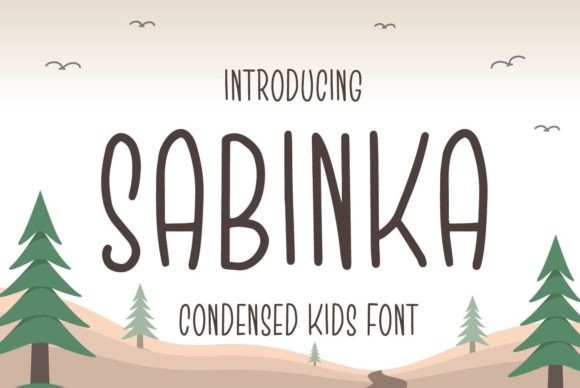
Sabinka: The Handwritten Font for Authentic Design
Typography is more than just choosing letters; it's about setting a tone. When you want your design to feel personal, intimate, and crafted with care, a standard serif or sans-serif font often falls short. This is where Sabinka enters the conversation. It is a delicate, well-rounded handwritten typeface designed to inject authenticity into any visual project. Whether you are a seasoned graphic designer working on a high-end wedding suite or a small business owner creating a logo for a local bakery, Sabinka offers a specific aesthetic that bridges the gap between casual handwriting and professional elegance.
Understanding the Sabinka Aesthetic
At its core, Sabinka is defined by its fluidity and balance. Unlike many script fonts that can feel disjointed or overly chaotic, Sabinka maintains a "well-rounded" structure. This means that while it mimics the natural flow of a hand holding a pen, the letterforms are legible and consistent. It avoids the jagged edges that often plague handwritten styles, opting instead for smooth curves and a delicate weight. For a designer, this translates to a font that is versatile. It does not scream for attention with loud, aggressive strokes; rather, it whispers sophistication. This makes it particularly suitable for contexts where elegance is paramount, such as wedding invitations, high-end stationery, or minimalist branding.
Why Beginners and Hobbyists Gravitate Toward Sabinka
For those just starting their creative journey, the barrier to entry can often be technical skill. You might have a vision for a beautiful birthday card or a scrapbook page, but you lack the calligraphy training to execute it by hand. Sabinka acts as a bridge for these creators. Because it is a digital font, it offers the aesthetic of hand-lettering without the steep learning curve of using a brush pen and ink.
A hobbyist creating a family recipe book, for example, doesn't need to worry about ink bleeding through paper or maintaining a consistent slant across 20 pages. Sabinka provides that "homemade" feel with digital reliability. For beginners, the priority is often ease of use and immediate results. Sabinka delivers on this by being intuitive; you type your text, and the "handwritten" look is instantly applied, allowing the creator to focus on layout and imagery rather than penmanship drills.
Professional Applications: Branding and Marketing
While Sabinka is accessible to beginners, it holds significant weight in professional circles, particularly in branding and marketing. In a digital landscape saturated with sterile, geometric sans-serif fonts (think the logos of major tech companies), there is a growing demand for "human" branding. Consumers are increasingly drawn to brands that feel approachable and genuine.
Small Business Owners and Entrepreneurs
Consider a small business owner running a boutique candle company or a freelance wedding photographer. Their brand identity relies heavily on authenticity. If they use a generic system font, their brand may appear cold or corporate. However, by utilizing Sabinka for their logo or website headers, they instantly communicate a specific set of values: craftsmanship, attention to detail, and a personal touch.
For these users, the evaluation criteria differ from a hobbyist. They are concerned with commercial value and presentation. They need to know that the font renders well across different media—from a website viewed on a smartphone to a physical product label printed on textured paper. Sabinka’s "well-rounded" nature ensures that it remains legible even at smaller sizes, a crucial factor for packaging where space is limited but readability cannot be sacrificed.
Creative Versatility: From Invitations to Social Media
The utility of Sabinka spans a wide array of creative outputs. Its classification as a "crafty" font does not limit it to paper goods; it is highly effective in digital environments as well.
Event Planners and Wedding Invitations
The most traditional use case remains wedding invitations. Here, the priority is elegance and sentimentality. Sabinka’s delicate strokes mimic the look of high-quality engraving or hand-lettered calligraphy, which is the gold standard for formal stationery. Event planners can pair Sabinka with a clean, light sans-serif for the details (dates, times, addresses) to ensure the invitation is both beautiful and functional.
Content Creators and Digital Marketers
For bloggers and social media managers, the challenge is often stopping the scroll. A static block of text rarely grabs attention on platforms like Instagram or Pinterest. Creators use fonts like Sabinka to create "quote graphics" or stylized headers that stand out in a busy feed. The font’s aesthetic lends itself well to lifestyle, wellness, and travel niches, where a personal voice is part of the product. For these users, speed and flexibility are key. They need a font that looks good quickly and can be adapted to various color palettes and background images without clashing.
Evaluating Sabinka: Does It Fit Your Needs?
Choosing a font is a subjective decision that depends on the specific requirements of your project. To determine if Sabinka is the right tool for your kit, it helps to assess your priorities against its strengths.
- For the Educator or Publisher: If you are creating materials for young children, such as worksheets or storybooks, Sabinka could be useful for headers to make the material feel friendly. However, an educator must prioritize legibility above all else. While Sabinka is well-rounded, it is still a script font. It is likely best used for titles or emphasis rather than long blocks of body text, where a standard serif or sans-serif would be easier on the eyes.
- For the Freelance Designer: Reliability is paramount. You need to know that the font files are clean and that the kerning (spacing between letters) is handled well so you don't spend hours adjusting individual letters. Sabinka’s design suggests a focus on flow, which helps maintain a natural rhythm in the text.
- For the Consumer: Even if you aren't running a business, you might use Sabinka for personal projects like labeling pantry jars, creating a photo album, or writing a heartfelt letter. Here, the value lies in the emotional connection the font helps create.
Practical Tips for Using Sabinka
To get the most out of Sabinka, it helps to understand the context in which handwritten fonts thrive. Here are a few practical applications and considerations:
- Pairing is Key: A delicate font like Sabinka rarely works well when paired with another decorative font. To let Sabinka shine, pair it with something simple and geometric. For example, use Sabinka for the main headline and a clean font like Open Sans or Roboto for the sub-headers and body copy. This creates a visual hierarchy that guides the reader's eye.
- Spacing Matters: Handwritten fonts often benefit from slightly increased letter spacing (tracking). Because Sabinka is described as "delicate," cramming the letters too close together can make the text look cluttered. Giving it room to breathe enhances the elegant, airy feel.
- Color and Contrast: While black on white is standard, Sabinka looks particularly striking in muted, earthy tones or soft pastels. Think sage green, dusty rose, or slate blue. These colors complement the organic nature of a handwritten style.
- Size and Scale: Because of its intricate details, Sabinka is best used at medium to large sizes. Using it for fine print (like legal disclaimers or terms and conditions) is generally not recommended, as the thin strokes might become difficult to read at very small pixel sizes.
The Role of Authenticity in Modern Design
We live in an era of high-definition screens and vector precision. Paradoxically, this has led to a yearning for the imperfect, the human, and the organic. Sabinka taps directly into this cultural shift. It allows digital creators to bypass the sterility of the keyboard and evoke the warmth of a handwritten note.
For the entrepreneur, it is a tool to build trust. For the hobbyist, it is a way to add a layer of love to a gift. For the professional designer, it is an arrow in the quiver for when a project calls for softness. It is not a font that tries to be everything to everyone; it is a specialized tool designed to bring a specific, authentic flavor to your work.
Ultimately, the decision to use Sabinka comes down to the story you want to tell. If your story is one of precision, technology, and minimalism, a different typeface might be appropriate. But if your story involves warmth, creativity, elegance, and a human touch, Sabinka provides the visual vocabulary to tell it effectively. It proves that in a digital world, the art of the handwritten word still holds immense power.