Spooky Cat: A Designer's Guide to Halloween Typography
When planning seasonal projects, particularly those centered around Halloween, the choice of typography often sets the entire mood. While there are thousands of fonts available, Spooky Cat has carved out a distinct niche as a Halloween-inspired display font. It is not merely a collection of letters; it is a stylistic statement that balances whimsy with a contemporary edge. For designers and content creators looking to evoke a specific atmosphere without resorting to clichés, understanding the nuances of Spooky Cat is essential.
Defining the Aesthetic: What Makes Spooky Cat Unique?
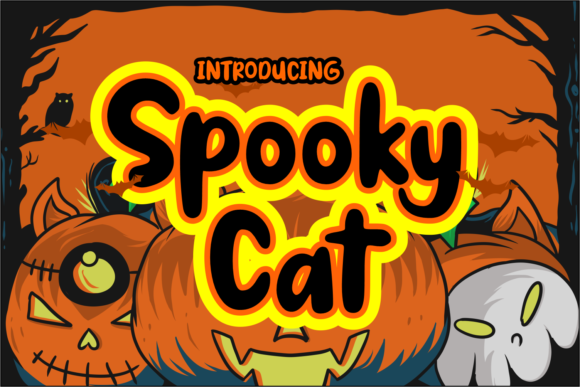
At its core, Spooky Cat is a display typeface, meaning it is designed for headlines, logos, and short bursts of text rather than long-form paragraphs. However, what distinguishes it from generic horror fonts is its "lovely style." Many Halloween fonts rely on jagged edges, dripping blood effects, or distressed textures to convey fear. Spooky Cat, conversely, approaches the holiday with a sense of playful sophistication.
The font features soft, rounded terminals and slightly irregular baselines that suggest movement and personality without sacrificing legibility. It captures the essence of "spooky season" through its thematic shape language—perhaps mimicking the arch of a cat’s back or the curl of a witch’s smoke—rather than through gore or darkness. This makes it a versatile tool for projects that aim for a "cute-spooky" or "whimsical-gothic" vibe rather than a truly terrifying one.
The "Contemporary Coolness" Factor
The prompt of contemporary coolness is central to the utility of Spooky Cat. In recent years, design trends have moved away from the gritty, grunge aesthetics of the early 2000s toward cleaner, more vector-friendly designs. Spooky Cat fits perfectly into this modern landscape. Its curves are smooth, rendering well on both high-resolution screens and physical print.
This contemporary feel allows it to bridge the gap between seasonal novelty and year-round utility. While it screams October, a designer might also utilize Spooky Cat for children’s book covers, fantasy game interfaces, or bakery branding where a touch of magic is required. It avoids the dated look of "party store" fonts, offering a polished alternative for professional work.
Comparing Spooky Cat to Traditional Horror Typography
When evaluating typography for a Halloween project, it is helpful to compare Spooky Cat against the broader categories of horror and seasonal fonts. Generally, seasonal typography falls into three buckets: the Slasher, the Gothic, and the Cartoonish.
- The Slasher: These fonts look like they were written with a bloody knife or scratched into a wall. They are high-tension and aggressive.
- The Gothic: These are blackletter or medieval styles. They evoke ancient manuscripts, castles, and vampires. They are often serious and dense.
- The Cartoonish: These are often bubbly, distorted, and associated with retro Halloween specials. They can sometimes look cheap if not designed well.
Spooky Cat operates in a unique space that borrows from the Cartoonish category but elevates it with professional polish. Unlike a Slasher font, Spooky Cat is approachable. Unlike a Gothic font, it is readable at a glance. If your project involves children’s content, family-friendly events, or modern lifestyle branding (like a Halloween-themed latte), Spooky Cat is likely superior to its darker counterparts. However, if you are designing a poster for a haunted house intended to terrify adults, the lack of sharp, aggressive edges in Spooky Cat might render it too friendly for the subject matter.
Tradeoffs and Practical Considerations
No typeface is perfect for every situation, and Spooky Cat is no exception. Understanding its limitations is just as important as appreciating its style.
Legibility vs. Style
As a display font with a distinct personality, Spooky Cat prioritizes style. Highly stylized fonts often feature unique letterforms where a capital 'Q' might look like a cat’s tail or an 'O' might resemble a pumpkin. While this adds charm, it can impede rapid reading.
Best Practice: Use Spooky Cat for headers, hero text, and logos. Avoid using it for body copy, ingredient lists, or navigational menus. If you pair it with a secondary font for reading text, ensure the secondary font is neutral (like a clean sans-serif) to let Spooky Cat shine without creating visual clutter.
Contextual Fit
The "lovely style" of Spooky Cat can be a double-edged sword. In the context of a corporate business report, it would be entirely inappropriate. In the context of a high-end fashion brand doing a Halloween capsule collection, it might be perfect. The decision to use Spooky Cat should be based on the target audience's expectation of fear.
- High Fear Factor Needed: Spooky Cat is likely the wrong choice. Look for distressed, sharp-edged gothic fonts.
- Fun/Celebratory Factor Needed: Spooky Cat is an excellent choice. It conveys the holiday spirit without the nightmares.
- Mystery/Magic Factor Needed: Spooky Cat works well, especially if paired with glowing effects or neon color palettes.
Best Use Cases for Spooky Cat
To maximize the impact of this font, consider the specific scenarios where its attributes align with project goals. Because Spooky Cat is a display font, it excels in environments where visual impact is more important than information density.
- Social Media Graphics: Instagram stories and TikTok overlays require instant engagement. The playful curves of Spooky Cat catch the eye quickly and fit the casual nature of social platforms.
- Event Invitations: For a Halloween party, costume contest, or fall festival, Spooky Cat sets a welcoming tone. It suggests that the event will be fun rather than frightening.
- Packaging Design: For seasonal food items (cookies, candy, coffee), the font offers a "treat" vibe rather than a "trick" vibe.
- Merchandise: T-shirts and tote bags often benefit from bold, singular typography. Spooky Cat is distinct enough to stand alone as a design element.
Evaluating Alternatives and Resources
When researching options, you will find that the market for Halloween fonts is saturated. As you evaluate alternatives to Spooky Cat, you should look for specific technical and aesthetic traits.
Variable Fonts vs. Static Files
Some modern typefaces are "variable," allowing you to adjust weight and slant on a slider. If Spooky Cat is offered as a static file, you are locked into its specific weight. If you need a font that can transition from a light, ethereal whisper to a bold, heavy shout, check if the alternative offers variable axes. Spooky Cat’s specific style usually implies a fixed weight, which is standard for display fonts but limits flexibility in responsive web design.
Vector Quality
Ensure that the font you choose has clean vector points. Cheap Halloween fonts often have jagged curves when zoomed in. Given the description of Spooky Cat as having a "lovely style," it implies smooth bezier curves. Always test the font at 200% zoom to ensure the edges are crisp, which is vital for large-format printing like banners or yard signs.
Character Sets
A common limitation of thematic fonts is a limited character set. Does the alternative support multiple languages? Does it include special ligatures or dingbats (like bats, moons, or cats)? Spooky Cat often includes these extras, which can be a deciding factor. If you are typing in a language that uses accented characters (like French or Spanish), verify that Spooky Cat supports them; otherwise, your text will fall back to a generic system font, breaking the design.
Decision Framework: Is Spooky Cat Right for You?
Making the final decision requires a practical assessment of your project's needs. Use the following framework to determine if Spooky Cat aligns with your goals.
Choose Spooky Cat if:
- Your brand voice is friendly, playful, and inviting.
- The project targets families, children, or a general audience averse to horror.
- You need a font that feels modern and "cool" rather than retro or gritty.
- The design relies on a single, strong typographic statement.
Choose an alternative if:
- You are creating a design for a mature audience seeking high-intensity horror.
- You require a font that functions well in small body text.
- Your project requires a vintage or Victorian aesthetic.
- You need extensive variable font customization for web performance.
Conclusion
In the crowded field of seasonal typography, Spooky Cat stands out by rejecting the tropes of gore and grit in favor of charm and style. It is a contemporary solution for designers who want to acknowledge the Halloween season while maintaining a high standard of visual aesthetics. By understanding its strengths as a display font and recognizing where its "lovely style" fits—or doesn't fit—within a project, you can make an informed choice that enhances your design rather than distracting from it. Whether you are branding a fall festival or designing a social media campaign, Spooky Cat offers a distinct, modern voice in the spooky lexicon.