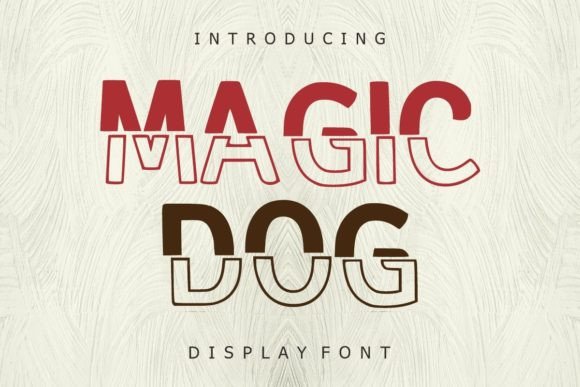
Unleashing Creativity: Why Magic Dog is the Display Font Your Designs Need
In the crowded digital landscape, typography is often the silent hero of effective communication. While body text requires stability and readability, display fonts carry the burden of personality. They are the first impression, the visual hook that determines whether a user stays or scrolls past. For designers, brand managers, and content creators, the search for a typeface that balances whimsy with visibility is a constant challenge. Enter Magic Dog, a fun, cartoonish, double-outlined display font designed to inject life and energy into any visual project. Understanding how to leverage a font like Magic Dog can transform a standard design into a memorable experience.
The Challenge of Standing Out
Modern design trends often oscillate between stark minimalism and chaotic maximalism. However, finding a middle ground—a design that is playful and inviting without sacrificing legibility—remains a significant hurdle. Many designers face the issue of "font fatigue," where the same standard sans-serifs and serifs are recycled across industries, leading to generic branding. There is a specific need for typefaces that convey joy, movement, and distinctiveness, particularly in sectors like entertainment, education, and family-oriented services. This is where the unique aesthetic of a double-outlined font becomes invaluable.
What Makes Magic Dog Unique?
Magic Dog is not just another novelty font; it is a carefully crafted tool for visual storytelling. The defining characteristic of this typeface is its "double-outlined" structure. Unlike standard solid fonts, the double outline creates depth and dimension, allowing the letters to pop off the background. This cartoonish style mimics the bold, rounded typography often seen in animated features and comic books, evoking a sense of nostalgia and fun.
The construction of the Magic Dog font ensures that it maintains its structural integrity even when scaled up for large headlines. The thick strokes and soft, rounded edges make it approachable, removing the harshness often associated with corporate typography. It is a display font, meaning it is optimized for larger sizes where its intricate outlines and playful curves can be fully appreciated.
Addressing Specific Design Needs
Different projects have different typographic requirements. Magic Dog addresses several specific needs that other fonts often overlook:
- Brand Personality: For brands targeting a younger demographic or those wanting to appear friendly and accessible, Magic Dog provides an instant visual tone. It signals that the brand does not take itself too seriously and is here to engage.
- Visual Hierarchy: In a layout with dense information, a bold display font is essential for breaking up text. Using Magic Dog for H1 or H2 headers creates a strong contrast against standard body text, guiding the reader’s eye effectively.
- Seasonal and Thematic Campaigns: Whether it is a holiday promotion, a birthday invitation, or a summer festival poster, the cartoonish nature of the font fits seamlessly into celebratory contexts.
Practical Applications of Magic Dog
The versatility of Magic Dog extends across various mediums. Because it is a display font, its application is best suited for headlines, logos, and short bursts of text rather than long paragraphs. Here are some practical ways to implement this font in your workflow:
1. Branding and Logo Design
A logo sets the stage for a brand's identity. For businesses in the pet industry, children’s education, toy manufacturing, or casual gaming, Magic Dog offers a ready-made personality. The double-outlined effect adds a layer of polish that flat colors cannot achieve, making the logo look dynamic and modern. It suggests movement and energy, which is ideal for brands that want to be perceived as active and innovative.
2. Social Media Content
Social media platforms are visually driven. Posts that feature bold, easy-to-read text tend to perform better in terms of engagement. Magic Dog is perfect for Instagram stories, YouTube thumbnails, and TikTok overlays. Its cartoonish style cuts through the noise of a busy feed, grabbing attention instantly. The playful aesthetic can make promotional content feel less like an advertisement and more like a friendly suggestion.
3. Merchandise and Print
When it comes to merchandise like T-shirts, tote bags, or stickers, the "feel" of the font is paramount. Magic Dog translates beautifully to physical products. The thick outlines ensure that the text remains legible even when printed on textured fabrics. It appeals to a market that values quirky, pop-culture-inspired aesthetics.
4. User Interface (UI) Elements
While not suitable for body copy, Magic Dog can be used sparingly in User Interface (UI) design to highlight specific elements. Think of "Start Game" buttons, notification badges, or achievement titles in a gamified app. Using this font for interactive elements makes the user experience feel more rewarding and playful.
Implementation Strategies for Different Users
How you use Magic Dog depends largely on your role and project goals. Here is how different professionals might approach implementing this font:
For Graphic Designers
Designers should focus on contrast. Pair Magic Dog with a clean, neutral sans-serif font for body text. The juxtaposition of the playful display font against a structured background creates a professional yet fun balance. Pay attention to the double outlines; ensure the background color does not clash with the outline colors to maintain readability.
For Web Developers
When integrating Magic Dog into a website, performance is key. Since it is a display font, it should only be loaded for specific headers to minimize page load times. Use CSS to control the font weight and spacing. Ensure that the font is accessible; while it is decorative, the text content itself should be readable by screen readers, so avoid using it for critical navigation labels unless accompanied by text alternatives.
For Content Creators
Creators can use Magic Dog to build a consistent visual identity across their thumbnails and video overlays. It acts as a signature style that followers can recognize immediately. Experiment with colors; the double outline allows for creative color combinations where the inner fill is one color and the outline is another, matching your brand palette.
Overcoming Common Typography Pitfalls
One common mistake with cartoonish fonts is overuse. If every piece of text on a page is written in Magic Dog, the design can become overwhelming and difficult to read. The "elevator" rule applies here: use it for the headlines that need to be read in a glance, not for the instructions that need to be studied.
Another consideration is color theory. The double outline of Magic Dog offers a unique opportunity to play with color. However, using high-contrast colors for the outline and the fill can sometimes create a vibrating optical illusion that strains the eyes. It is recommended to test color combinations on different screens to ensure visual comfort.
The Value of a Versatile Font Library
Building a robust font library is an investment in efficiency and quality. Having a font like Magic Dog on hand means you are always prepared for projects that require a burst of creativity. It eliminates the need to hunt for a suitable display font during a tight deadline. Because it is so distinct, it serves as a "Swiss Army knife" for fun-oriented projects.
Furthermore, the psychological impact of typography cannot be ignored. Fonts carry emotional weight. Magic Dog carries connotations of happiness, trust, and playfulness. In a world where consumers are increasingly looking for authentic and relatable brands, using a font that humanizes your content can be a strategic advantage.
Conclusion
Typography is more than just arranging letters; it is about arranging emotion and information. Magic Dog represents the intersection of technical design and artistic expression. Its double-outlined, cartoonish style offers a fresh alternative to standard display fonts, providing designers with a tool that is as functional as it is fun. By understanding its strengths and applying it thoughtfully to branding, social media, and print, you can elevate your creations and connect with your audience on a more vibrant level. Whether you are designing a logo for a startup or creating graphics for a community event, Magic Dog is an asset that ensures your message is not just seen, but felt.