Why Lovely Bunny is the Fresh Display Font Your Next Project Needs
In the world of design, finding a typeface that balances personality with professionalism can feel like a hunt. You want something that captures attention and conveys a specific mood without overwhelming your message. This is where a well-crafted display font becomes an invaluable asset. Enter Lovely Bunny, a charming and versatile typeface that brings a distinct, celebratory energy to a wide array of creative projects.
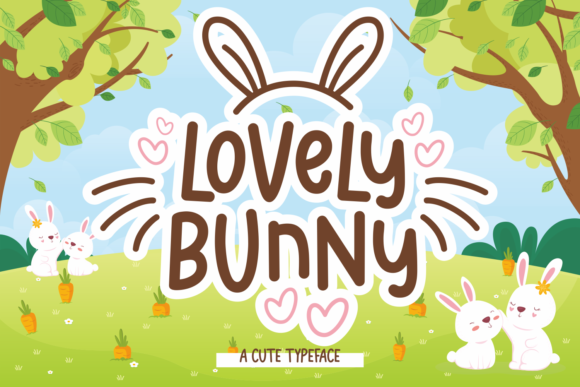
Inspired by the joyful, fresh aesthetic of spring and Easter themes, Lovely Bunny is more than just a seasonal novelty. Its design features soft, rounded letterforms with playful, bouncy baselines and subtle decorative elements that evoke a sense of warmth and approachability. The character shapes feel handcrafted, with a gentle irregularity that adds authenticity. It’s a creative font that communicates friendliness and fun, making it an excellent choice for projects aimed at children, families, or any audience where a lighthearted, positive tone is key. Unlike overly simplistic cartoon fonts, Lovely Bunny maintains a level of sophistication in its curves and spacing, ensuring it doesn’t look amateurish in professional applications.
Practical Applications: Where This Typeface Truly Shines
The true test of any premium font is its utility across different mediums. Lovely Bunny excels in contexts where you need to make an immediate, cheerful impact. Consider its use in logo design for a bakery, a children’s boutique, or a community event. The font’s personality becomes an instant part of the brand identity, signaling what the business is about before a single word of copy is read. For entrepreneurs and small business owners, integrating a font like this into their visual language can create instant recognition and emotional connection with their target market.
For packaging design, especially for products like candy, toys, or seasonal goods, Lovely Bunny can transform a label or box into something that feels special and giftable. Its readability at medium sizes makes it suitable for headlines on packaging, where clarity and charm must coexist. In the realm of editorial design, it can be used strategically for pull quotes, chapter titles in children’s books, or magazine features on family activities, adding visual interest without disrupting the flow of body text.
Digital creators will find it equally useful. For social media graphics, Lovely Bunny can make announcements, holiday greetings, or promotional posts stand out in a crowded feed. It’s a fantastic tool for bloggers and content creators who want to inject personality into their featured images or Pinterest pins. In web design, it can be applied to hero sections for specific campaigns or landing pages targeting a youthful demographic, though careful consideration must be given to its performance as a web font and fallback options.
Making It Work: Guidance for Designers and Marketers
Integrating a display font like Lovely Bunny effectively requires thoughtful execution. Its strength is in headlines and short bursts of text, not in setting paragraphs. Pairing it correctly is crucial. A clean, simple sans serif font or a highly legible serif font for body copy creates a necessary contrast, allowing the display font to be the star without causing visual clutter. For example, pairing Lovely Bunny with a neutral geometric sans serif for subheadings and body text achieves a balanced and professional layout.
When evaluating its fit for a project, consider the core message. Is the goal to convey whimsy, celebration, or childhood wonder? If so, it’s likely a strong candidate. If the project demands serious authority or stark minimalism, other typefaces would be more appropriate. Always test the font in context. Create mockups to see how it interacts with your color palette, imagery, and other design elements. Check the font pairing in various sizes to ensure the hierarchy is clear.
From a practical standpoint, verify the licensing terms for your intended use, especially if it’s for commercial projects. A quality commercial font will come with clear licensing for various applications. Review all the included styles and glyphs—many premium fonts include alternates, ligatures, and extended language support that can elevate your design further. Pay attention to kerning and spacing in your typesetting; even the most charming font can look off if letters are improperly spaced.
Ultimately, Lovely Bunny is a valuable addition to a designer’s toolkit of design assets. It’s a specialized instrument, not a workhorse for body copy. Used thoughtfully, it can inject a dose of joy and personality into branding, marketing materials, and personal projects, helping them connect with audiences on a more emotional level. It demonstrates how the right typeface is a powerful component of modern typography, shaping perception and enhancing communication far beyond the words themselves.